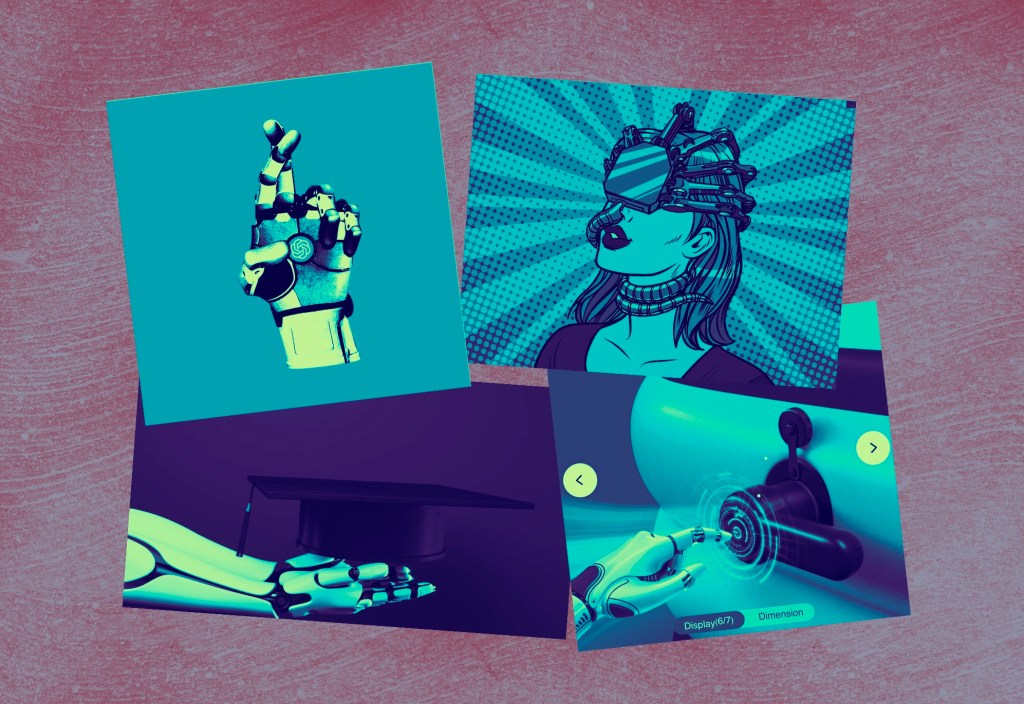
I am childless adult so it’s reasonable to ask, should I own a small kiddie pool for my backyard? What with the way electronics and water tend not to be friends, I didn’t expect that my search for an inflatable puddle-holder online would turn up bionic hand propaganda. The pool I found had some kind of self-inflate feature, and to illustrate it, the manufacturer decided to show a bionic hand pressing the button. What the hell is this supposed to suggest? “If you buy this self-inflating kiddie pool, you’ll feel like you’re living in a high-tech future where you have a bionic hand for some reason.” Or “You should let your disabled friend with a bionic hand press the button, they’ll love it.” Or “Your robot butler will inflate it for you.” Maybe I’m paying attention to nothing, but something is going on here and I intend to get to the bottom of it think about it for a short period of time.
If you’re reading yet another article about something called artificial intelligence, 9 times out of 10 they will pair the story with a featured image of either a bionic hand or an android. AI just exists in the ether, on our screens, and the only way to illustrate it is to think back to i, Robot (2004). This is especially amusing because for decades we have strictly imagined artificial intelligence as embodied—think about the Matrix and Terminator. A battle between humanity and AI isn’t much of a battle unless the AI is out there in the corporeal world with us, literally punching us in the face. Using the specter of robots in these articles makes the stories more compelling, unnerving, and disturbing. AI mimics us, but isn’t us, it takes our shapes, and seeks to replace us.
But robot Robin Williams doesn’t live in our homes (yet?). And most of our day-to-day engagement with bionic limbs and such is through shit like this—prosthetics. If you’re out in the world and see something like these robot hands it’s because someone is wearing it, not because there’s an android at the supermarket. I think the iconography of the robot hand can’t really be understood independently of discourses around disability. And the robot hand is especially powerful in the context of disability for what it represents: the promise of technological progress.
60 Minutes reports and the like love to show off high-tech prosthetics because it’s one of the most reassuring stories to tell the public—technology is getting better, human problems are getting solved, and we are getting ever-closer to abolishing disability. If you, the viewer, were to ever get into a horrific accident leaving you with fewer limbs than you started with, have no fear because we have the ability to rebuild you. Basically, there’s more hopeium jammed into bionic hands than there is circuitry.
So bionic hands are both hopeful and horrifying. They make low-tech things seem high-tech (such as a kiddie pool), but they can also be creepy. Maybe that tension is the reason why this imagery is everywhere now with the proliferation of AI. There’s an uneasy “friend or foe” vibe around these hands that makes it easy to lure people in and keep them on their toes. We aren’t quite sure if this technology can actually be helpful to people or if it’s some kind of twisted Trojan horse for god knows what sort of bullshit.
Discover more from Britt H Young
Subscribe to get the latest posts sent to your email.

Proudly powered by WordPress
 Britt H Young